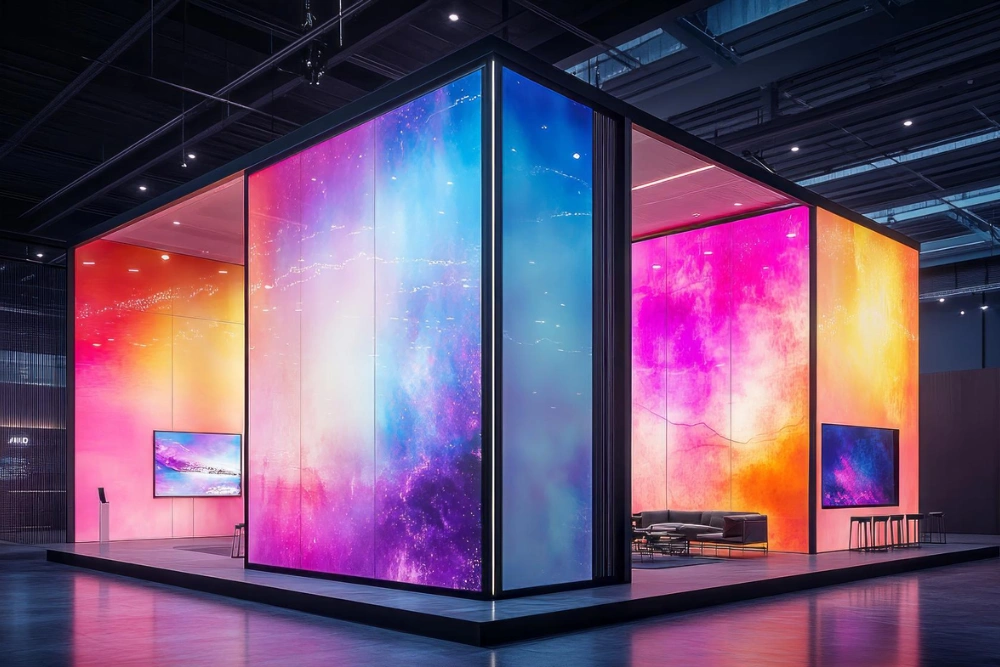
In today’s crowded exhibition halls, attention is the most valuable currency. Event professionals are no longer competing solely on products or services; they are competing for seconds of visitor focus. Within this fast-paced environment, visual structure plays a defining role. Exhibition panels have become one of the most effective tools for shaping first impressions, guiding visitor movement, and creating spaces that invite conversation rather than overwhelm. Used intelligently, they turn empty floor space into an experience that feels intentional, professional, and welcoming.
This shift reflects a forward-thinking mindset in event planning. Panels are no longer viewed as background elements. They are now central to how brands communicate, differentiate, and connect with their audience in live environments.
Human attention at exhibitions is selective and instinctive. Visitors scan stands quickly, responding to clarity, contrast, and coherence. Panels help organisers work with this behaviour rather than against it.
A well-placed panel creates a visual pause. It frames information, controls sightlines, and reduces clutter. Instead of bombarding visitors with too many messages, panels allow content to be layered, giving people the confidence to step closer and engage.
Event professionals use this psychological advantage to create calm within busy halls. By segmenting space visually, they make stands feel accessible rather than intimidating, even in high-traffic zones.
Exhibition spaces are often open and undefined. Panels provide structure without permanence, allowing professionals to shape the visitor journey from the moment someone approaches a stand.
Panels can act as backdrops, side walls, or subtle dividers between discussion areas. This flexibility helps teams design zones for demonstrations, meetings, or casual conversations, all within the same footprint.
When exhibition panels are aligned with the stand’s objective, whether lead generation, education, or brand awareness, the entire space works more efficiently. Visitors instinctively understand where to stand, where to look, and where to interact.
In exhibition settings, visual communication needs to be strategic and easy to understand. Businesses use panels to simplify complex financial services, helping visitors quickly grasp bookkeeping workflows, compliance steps, and reporting value, even without prior knowledge.
This principle mirrors how a bookkeeping outsourcing company operates. By using structured accounting processes, standardised systems, and clear financial frameworks, both approaches transform complex bookkeeping operations into organised, reliable presentations that build trust and encourage engagement..
The most effective exhibition panels do not attempt to say everything. Instead, they focus on relevance and readability. Event professionals carefully curate content to ensure it can be understood at a glance.
Key messages are placed at eye level, supported by minimal text and strong visual cues. Supporting information is then layered for those who step closer. This approach respects the visitor’s time while rewarding curiosity.
Panels also provide a stable surface for storytelling. Through diagrams, timelines, or thematic visuals, they guide visitors through a narrative that feels cohesive rather than fragmented.
One of the greatest strengths of modern panels is adaptability. Events vary widely in audience, scale, and purpose, and panels can be reconfigured to suit each context.
Modular panel systems allow professionals to reuse the same core elements while updating graphics or layouts. This reduces waste and ensures consistency across multiple exhibitions without appearing repetitive.
Panels can also be transported and installed efficiently, making them ideal for teams attending frequent events. Their ability to evolve alongside changing campaigns makes them a long-term asset rather than a one-off solution.
While panels are visually powerful, their role is to support human interaction, not replace it. Successful event professionals design panels that prompt questions rather than deliver monologues.
A concise statement, a compelling statistic, or a striking visual gives staff a natural opening to start conversations. Panels act as silent partners, reinforcing spoken messages and helping visitors remember what they have learned.
This balance between visual communication and personal engagement is what transforms casual interest into meaningful connections.
| Use Case | Panel Function | Visitor Impact |
| Brand Backdrop | Reinforces identity and values | Builds trust |
| Space Divider | Defines zones within a stand | Improves flow |
| Information Display | Communicates key messages | Enhances clarity |
| Visual Anchor | Draws attention from distance | Increases footfall |
| Reusable Asset | Adapts to multiple events | Consistent presence |
Material choice influences both appearance and durability. Panels must withstand transport, installation, and long exhibition days without losing impact.
Lightweight rigid boards are popular for their smooth finish and print quality. Fabric panels offer a softer aesthetic and reduce glare under strong lighting. The key is selecting materials that align with the brand’s tone while remaining practical for repeated use.
Visual quality should never be compromised. Crisp printing, accurate colours, and clean edges contribute significantly to how a stand is perceived.
Sustainability is increasingly influencing event design decisions. Panels that can be reused, re-skinned, or recycled align with broader environmental goals while also offering cost efficiencies.
Event professionals are embracing systems that reduce single-use materials and minimise waste. This responsible approach resonates with modern audiences, who value brands that demonstrate awareness beyond immediate promotion. Exhibition panels designed with longevity in mind support both ethical and commercial objectives.
No two exhibitions attract the same visitors. Panels must be adaptable not only in structure but also in message.
Professional audiences may respond to clarity and precision, while creative industries may value bold visuals and conceptual design. Panels can be tailored through graphics and layout without changing the underlying system.
This adaptability ensures relevance across sectors, helping professionals remain agile in a competitive events landscape.
Ultimately, panels are most effective when integrated into a broader event strategy. They should reflect the stand’s goals, complement staff interactions, and align with pre-event marketing.
When all elements work together, panels become more than displays. They become strategic tools that amplify presence and attract the right visitors, not just more visitors.
Exhibition panels play a decisive role in how event professionals attract and engage visitors. By shaping space, guiding attention, and reinforcing credibility, they transform exhibition stands into purposeful environments. Used thoughtfully, it balance visual impact with clarity, supporting meaningful conversations rather than distracting from them. Their flexibility, reusability, and strategic value make them essential for modern events. As exhibitions continue to evolve, panels will remain a cornerstone of effective engagement, helping brands stand out confidently in even the busiest halls.
© 2026 Foamex Board. All Rights Reserved.