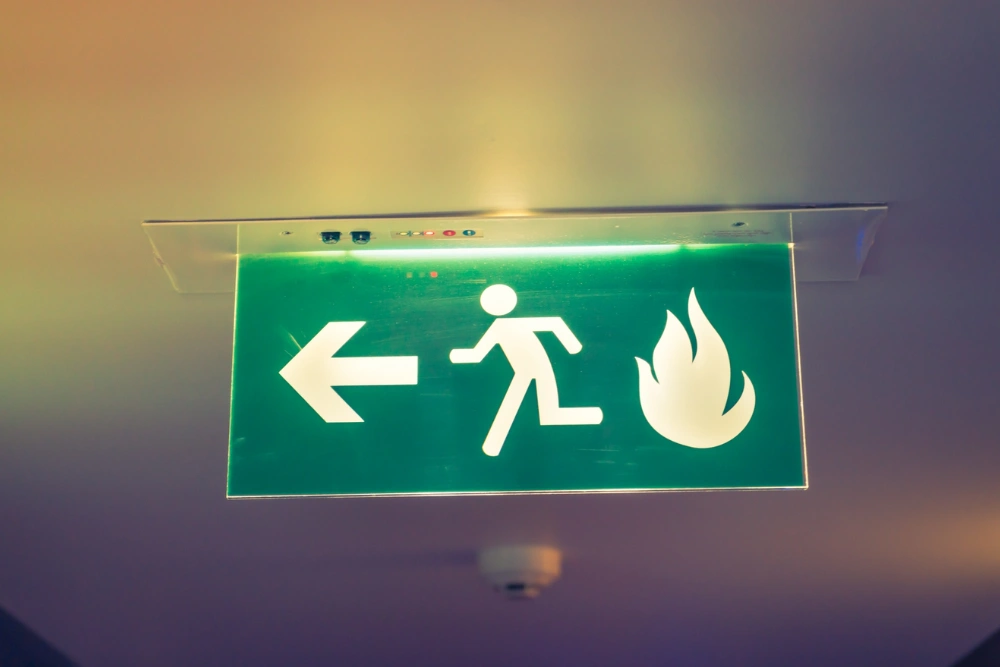
Fire safety is not only a legal responsibility for business owners but also a fundamental duty of care to employees, customers, and visitors. While fire alarms and extinguishers often receive regular attention, fire exit signage is sometimes overlooked. Yet, in an emergency, clear and visible exit signs can make the difference between calm evacuation and dangerous confusion. This practical guide helps business owners assess whether their fire exit signs are truly visible, effective, and fit for purpose.
By following a structured checklist and understanding how placement, lighting, and maintenance affect performance, organisations can create safer environments that support confident evacuation under pressure.
During a fire or power failure, visibility is often reduced by smoke, stress, and unfamiliar surroundings. Fire exit signs must work instantly without explanation. If a sign cannot be seen clearly from a distance or is blocked by fixtures, it fails its primary purpose.
Visible exit signage supports faster evacuation, reduces panic, and helps people move towards safety even if they are unfamiliar with the building layout. For business owners, this visibility also demonstrates a proactive approach to safety management rather than reactive compliance.
Fire exit signage comes in several formats, each suited to different building layouts. Wall-mounted signs are common, but in many commercial spaces they are not enough on their own. Hanging fire exit signs are particularly effective in large, open-plan areas, long corridors, and spaces with high shelving or visual obstructions. Suspended from ceilings, they remain within the natural line of sight and are easier to spot in crowded environments.
Illuminated signs add another layer of reliability, ensuring exits remain visible during low light or power interruptions. Choosing the right type depends on ceiling height, layout complexity, and the typical movement of people within the space.
The following checklist provides a practical way to assess whether your fire exit signs meet real-world visibility needs.
Stand at different points within each room or corridor and check whether exit signs are clearly visible without moving. If a sign disappears behind fixtures, partitions, or décor, visibility is compromised.
Signs positioned too high or too low can be missed. Hanging fire exit signs should be suspended at a height that aligns with eye level from a distance, particularly in wide or busy areas.
Evaluate how signs appear under normal lighting and in reduced lighting scenarios. Illuminated signs should remain legible even if main lights fail. Reflections or glare should not obscure symbols or text.
Arrows and symbols must clearly indicate the correct direction of travel. Ambiguous signage can slow evacuation and create bottlenecks at decision points.
All exit signs should follow a consistent design and visual language. Mixing styles or formats can confuse occupants, especially visitors unfamiliar with the premises.
In environments such as warehouses, retail units, and offices with suspended ceilings, hanging fire exit signs provide enhanced visibility across longer distances. Because they are positioned within open sightlines, they remain visible above crowds and furniture.
Using hanging signs also helps reinforce exit routes, especially where wall space is limited or frequently altered. When installed thoughtfully, they complement wall-mounted signs rather than replacing them, creating a layered guidance system.
This approach is particularly valuable in buildings that undergo frequent layout changes, where flexibility and adaptability are essential to maintaining safety standards.
Fire safety elements do not exist in isolation; they are part of wider building management routines. During scheduled inspections, upgrades, or maintenance works, fire exit signage is often reviewed alongside other essential systems.
In commercial properties, this coordination frequently includes services provided by air conditioning companies, where planned maintenance schedules offer an opportunity to check visibility, placement, and condition of fire exit signs without disrupting daily operations.
Even well-installed fire exit signs can lose effectiveness if not maintained. Dust accumulation, fading, and electrical faults reduce visibility gradually, often without being noticed.
Routine inspections should form part of a wider fire safety review. These checks should include cleaning surfaces, testing illumination, and confirming that hanging fire exit signs remain securely fixed and correctly aligned.
Any building modifications, such as new partitions or display units, should trigger a review of signage placement. Treating signage as a living system rather than a one-off installation ensures it remains effective as the building evolves.
One frequent mistake is relying on minimal signage to meet perceived requirements rather than practical visibility needs. Compliance-focused placement can leave gaps in guidance where people actually move.
Another issue is visual clutter. Overloading areas with competing signs, posters, or decorative elements can draw attention away from exit signage. Fire exit signs should always be the most immediately recognisable safety feature within a space.
Finally, ignoring user perspective can undermine good intentions. Signs should be assessed from the viewpoint of visitors, not just staff familiar with the building layout.
Clear fire exit signage reflects a wider culture of safety and responsibility. It shows that a business values preparedness and takes proactive steps to protect everyone on the premises.
For business owners, investing time in reviewing and improving signage also reduces operational risk. Well-marked exits support smoother evacuations during drills and emergencies, minimising disruption and potential harm.
Incorporating hanging fire exit signs into a broader signage strategy allows organisations to adapt to complex layouts while maintaining clarity and confidence.
Fire exit sign visibility is not something to assume; it must be actively checked, reviewed, and improved. By assessing sightlines, lighting, placement, and maintenance, business owners can ensure their signage performs when it matters most. Hanging fire exit signs play a crucial role in complex and high-traffic environments, reinforcing guidance where wall-mounted signs fall short. When combined with thoughtful environmental planning and regular reviews, visible exit signage becomes a powerful safeguard rather than a forgotten fixture. A clear, well-lit path to safety protects people, supports compliance, and strengthens trust in any business environment.
© 2026 Foamex Board. All Rights Reserved.